Chapter 15 – What is it with values, anyway?

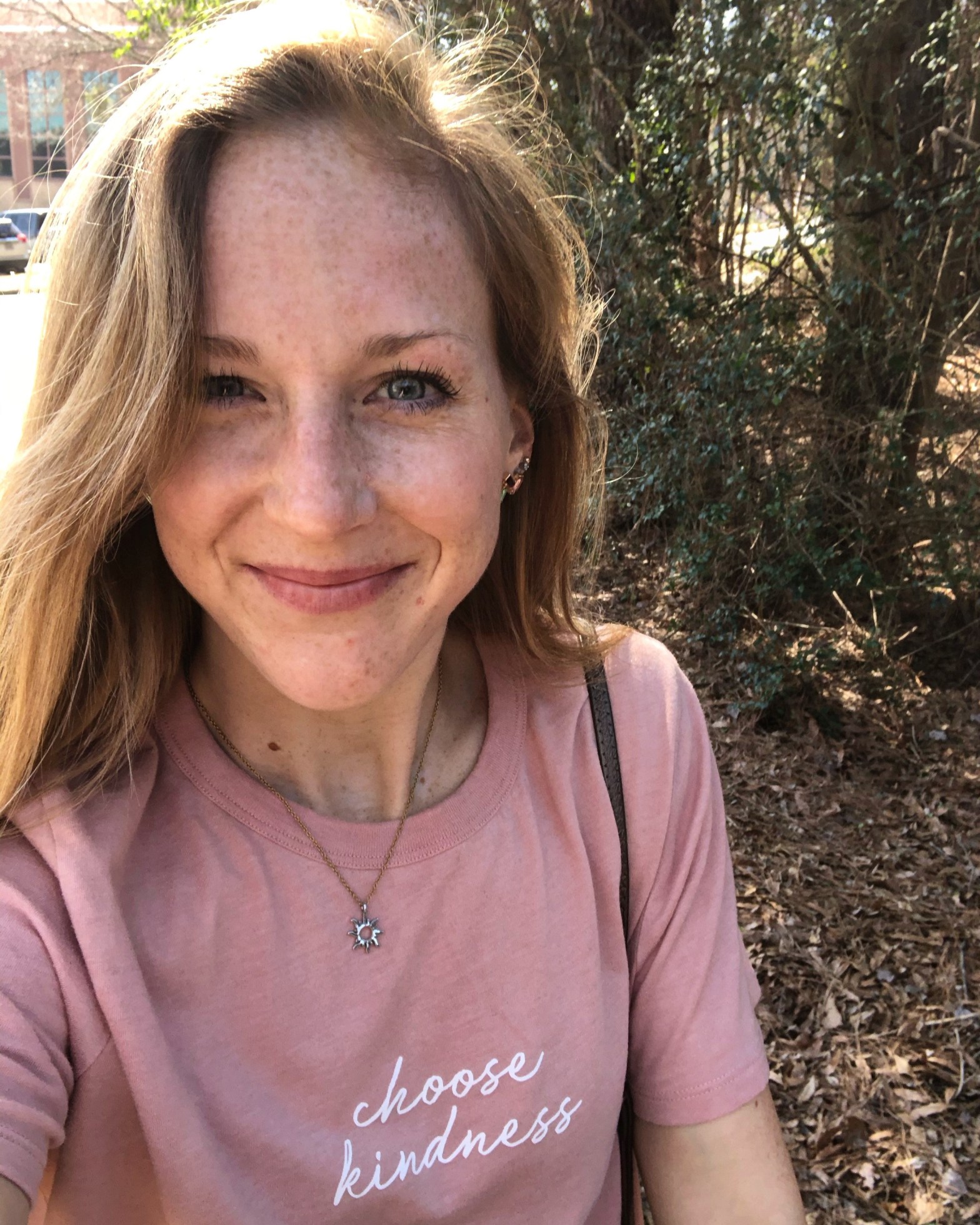
I have a shirt. It’s my favorite shirt, actually.

It is bubblegum pink and has the phrase “choose kindness” written in script across the front. I bought it on a whim, from Target, because, yes, I am that girl who goes in for one thing and ends up with everything else in my cart –

Let’s be real, who doesn’t do that at Target?

and also loves to dress up a good graphic t-shirt.

In all seriousness, though, every time I wear it, I think more and more about how deeply I value kindness, or maybe, more importantly, the act of.


As you likely know by now, I am a massive fan of the podcast Good Life Project. Jonathon Fields is a powerful but gentle voice of wisdom. I aspire to be as beautifully adept as he is at interviewing people and painting life stories.

Beyond the guests on the show, I always look forward to the end of each episode when he asks every guest, “If I offer up the phrase, ‘to live a good life,’ what comes to mind?” One of my particularly favorite answers was from Scott Barry Kaufman who gave the following response:

“I really thought the Greeks got it right when they talked about eudaimonia, living life in accord with your most authentically felt values and your highest, greatest strengths. To me, that would be a fair definition of living a life well-lived.”1

If you, like me, are wondering what ‘eudaimonia’ is, Webster defines it quite simply as “well-being” or “happiness.” Many sources date the term back to Artistotle’s work, where it takes on the meaning “of good spirit.”

From the beginning of the writing journey that became On Happiness, I have considered happiness to be a by-product of a value-driven life, values that guide the thoughts, choices, and actions of our everyday lives.

But what does that really mean?

Well, for starters, I suppose what I mean to say is that when I think about many of my happiest moments, or my usual happy-go-lucky Jade state-of-being, I realize I am happiest when living these values.

Take kindness, for example.

I am not leaving my house with the sole purpose of holding the door open for people, donating to charity, buying coffee for every person ahead of me, or telling someone their hair looks nice. For one, I would be broke, because I drink a lot of coffee, and two, I am not trying to make myself feel better by giving a compliment to get a compliment.

Rather, I go out with a kind heart and an open mind with the intent to see people – their perspectives, worries, troubles, needs – so that they feel heard, so that they know their opinions and struggles matter. I go out with the intent to appreciate what is around me so that I may see a piece of someone they have forgotten, so that when I see them, they, too, see themselves.

At the end of the day, I think that’s all we all want – to be seen as an individual capable of good, capable of love and being loved. I am certain some will disagree with me, but I do believe in the inherent good of everyone. We all present a face to the world, sometimes a guarded one and sometimes an open one, depending on whether we are afraid of being hurt, whether or not we’ve had a bad day.

But I think if we can all remember that underneath the mask there are unknown struggles, that there are real needs and real fears, our perspectives and dispositions may be more likely to exude just a bit more kindness toward both the stories and turmoil surrounding us every day.  

When I saw that shirt – my ‘choose kindness’ shirt – my mind immediately jumped to all I feel when I think about kindness. For example, I find a lot of comfort in the word: it is gentle, unassuming, accessible, soothing, surprising.

Kindness is one of the easiest things in the world to give – besides a smile – and I really think there is no greater gift than using kindness to show up and show others you accept every bit of them at any moment, on any day, at any time. And cliché as it may be, embodying the golden rule – treating others the way you want to be treated – is a major reason why I staunchly believe in the value of kindness and its resulting impact on my state of happy being.


For as much as I value kindness, I also strongly believe in the value of gratitude, likely because I find it hard to discern where the trail of kindness end and that of gratitude begins.

I think about gratitude this way: I am an exceptionally lucky person. And I don’t mean that I find four-leaf clovers everywhere I go (though I do find a lot of heads-up pennies). No, what I mean is that I know I have been blessed with an incredibly fortunate life filled to the brim – overflowing, actually – with some of the best people. On days I am feeling particularly lonely, without fail, a friend always calls, and it is on these days I spiral round and round remembering the hundreds of happy moments that have graced my life.


Six months before graduating from Texas Christian University, if you had told me I would move to Alabama and then eventually Georgia, I probably would have laughed in your face.

I know that is probably not the first time you’ve heard someone start a story that way, but until you’ve experienced a whirlwind of experiences that make you appreciate the absolutely crazy ways life always seems to work out, I’ll stick with the routineness of that phrase.

Over time, I have come to appreciate the culmination of my experiences – life – in this way. And it can be (almost) overwhelming. When I was in my undergraduate degree, I know I thanked people for their help. In hindsight, though, I wonder how deeply I meant it. I try to never give an insincere ‘thank you.’ That’s a waste of time. But as I have grown older, I am time and time again struck by the sheer number of lives that have touched mine, a fact I most certainly took for granted when I was younger.

Let’s take Alabama, for example.

Now I know you are probably rolling your eyes, giving a little chuckle, and remarking, “I saw this one coming.” But the job I had in Alabama was, in a way, my actual dream job. Sure, over time and with more experience, the dream has changed slightly, but at the core, my job there remains my dream job.

I mean, really, though, who wouldn’t want to get paid to play on a farm, run around town simply talking to everyone, and take home tons of produce to cook for loved ones?

Riddle me this – who in the world gets so lucky as to find, live, and give everything to exactly what they wanted to do, straight out of college, at a mere 21 years of age? I would harken a guess to say not many, and that fact alone moves me near to tears more often than I would like to admit.

But it’s not just Alabama. I just spent many paragraphs talking about how I try to uphold kindness, but in reality, I think I really view kindness as one of my core values simply because I think it is the only way I can ever repay all the kindness bestowed onto me. I have friends from all over and family back home who are always behind me – something I try to never forget. And to not forget, I give thanks. I print out pictures and hang memories all over my home. I smile. I dance. I sing. I call people up and say, “Hey, remember that moment when…well, thank you, because it’s made me into who I am today.” I write cards. I listen. I show up. With kindness and gratitude that spurns joy. Every day. Because when you are as lucky as I am, I do not know how in the world you could not be a pretty happy gal with an equally happy smile.

I am lucky I get to exercise creativity in my everyday life. That I have people to be grateful for, that inspire me to be kind in all that I do. That I am in a place where I can value joy, value happiness.

Yes, it’s a good life, y’all.

And I know some days might not feel like that. Somedays you might want to run, to hide, to forget your values.

I won’t say my values must be your same values, but I do think that if you value happiness itself

– and values that help you find an astonishing sense of joy and gratitude for existence, that make you want to show up, even on those tough days –

then you will also be likely to see the world of goodness that exists before your eyes.


Notes

  1. For more, check out the episode here, “Redefining Intelligence and Human Potential | Scott Barry Kaufman.
Chapter 14 – Idea Souvenirs

I have always been a consumer of information.

A three-minute car ride to grandma’s house? I had a book in my hand. A billboard flashing by outside? You bet I read those words. Nutrition facts label on the milk gallon in front of me? I read it during dinner. Every night.

While writing On Happiness, I listened to or read over a hundred different podcasts, books, and articles.

I was an information-and-perspective-seeking fiend.

Up until that point, never in my life had I truly functioned simply off the adrenaline from my ideas and epiphanies, as well as the ones from others that so succinctly summarized the thoughtful wanderings my subconscious did not know how to formulate.

I kept two journals during the period in which I wrote this. I carried these journals with me almost everywhere – and also had an ever-growing note on my phone – just so I could keep track of all the things I wanted to say, all the strands of ideas I did not want to forget.

One day – I was out on a walk, I am sure of it – I was listening to yet another episode from the Good Life Project. In this episode, the host, Jonathon Fields, interviewed Seth Godin, an acclaimed author among many, many other things.1 I always laugh when I hear these episodes, especially some of the ones recorded pre-coronavirus, because the host and guest may joke about their setting. Like an excellently written book, these snippets of conversation create images in my mind, and I smile along with them. In this particular episode, Fields makes note of Godin’s bookshelf:

“We’re hanging out right now, it’s almost hard to not make a quick comment, and behind us is this stunning wall of books. Some of them are yours, many in different languages. You’ve read all of these, I’m assuming?”

Seth replies, “Most of them – I wrote some of them, the ones I wrote I definitely read. I gave away 3,000 books when I moved to this smaller office and I miss ’em every day…”

“No kidding.”

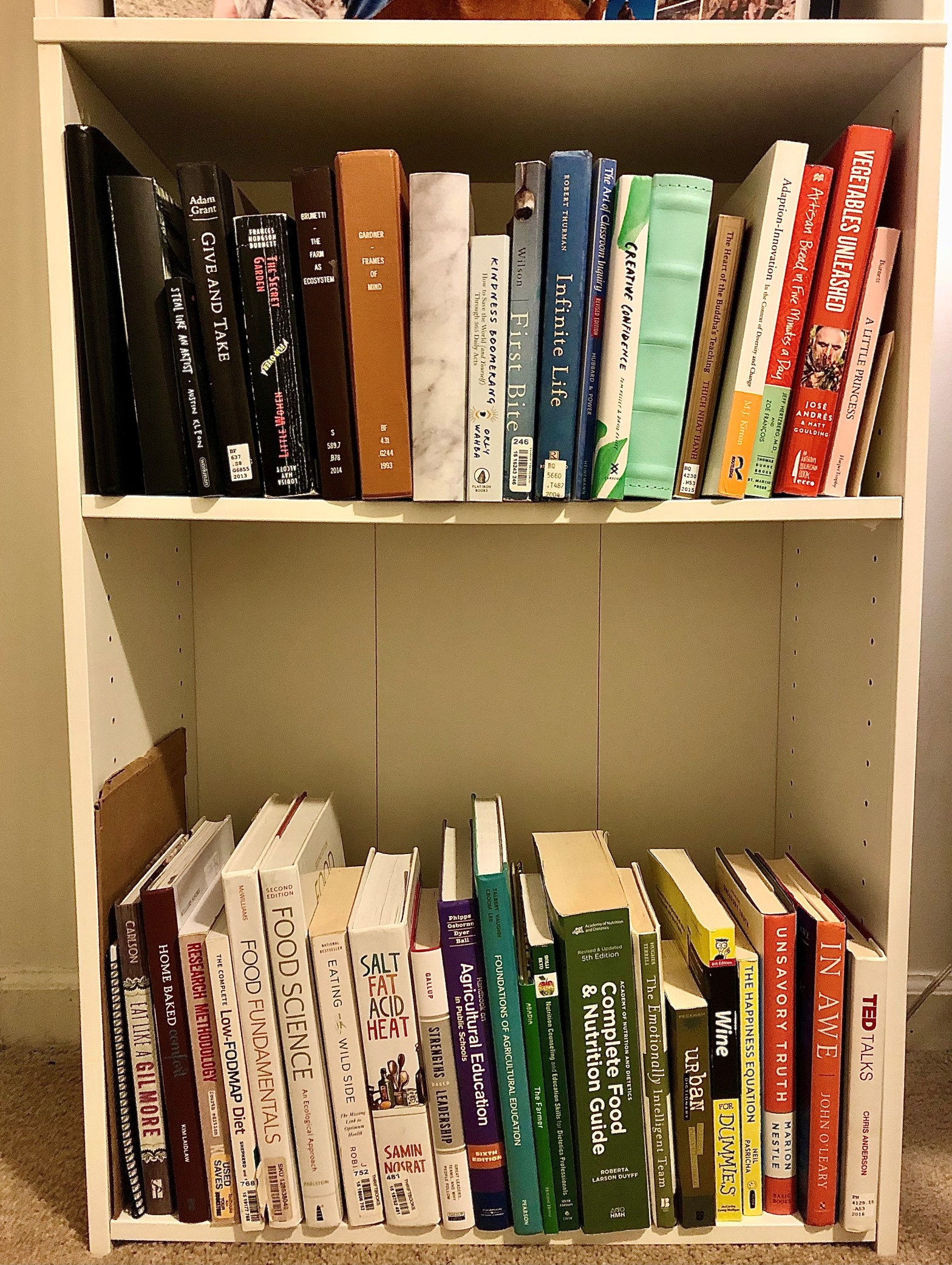
“…because a book is a souvenir of an idea, and you know, you come in here and see something and you can go, ‘oh yeah!’ and then you can go do something…they’re like old friends.”

I was so taken by the concept – the idea that a book is a souvenir of an idea – that I went and found his whole quote:

"A book is a physical souvenir, a concrete instantiation of your ideas in a physical object, something that gives your ideas substance and allows them to travel."

Wow, just wow.

As a child, I was always biking to the library. (In hindsight, I’m surprised my parents let me bike across town, down the main road, to get there. I suppose I was far too independent to even ask permission, and I probably didn’t want to hear the word “no” anyway – the books were waiting for me!) I was actually always begging my mother to buy me books, but she insisted the library was better, that the books were free, and “where in the world would you even keep all those books, anyway?”

Well, mom, you were right, because now, as an adult, I love the library. I mean, I obviously did as a child, too, but now I can fully appreciate the “free-ness” the library offers.

Since starting graduate school at UGA, I find I almost always have at least 15 books checked out at any given time. Some are for class, some for research, others for inspirational reading, and still others for pleasure reading. The ones I have for inspirational reading, well, I almost always start dog-earring the pages filled with those idea souvenirs, which, I know, with library books is a poor habit.

So I started buying them.

My desk, windowsills, and single bookshelf are full of books, and my wallet usually pleads with me to just make a couple of notes on paper and move on rather than searching a website (albeit thrift books) for the eighth time that week to see what bargain deal I can find. But Seth Godin was right. Books – and podcasts – are souvenirs to ideas.

I consumed (or rather, still consume in general) an incredible amount of information while writing On Happiness. So many things I listened to struck a chord, so I started saving them to a playlist, a playlist I so entitled “idea souvenirs” because I was enamored with the concept of being able to travel back to the moment in time that I heard something that entirely changed my perspective.

Many different voices make up this playlist: Neil Pasricha, Dan Pink, Adam Grant, Tom Kelley, Scott Barry Kaufman, Brené Brown, Mihalyi Csikszentmihalyi, Elizabeth Gilbert, Susan Piver, and so many more. Many of these individuals I became familiar with – unsurprisingly – because of listening to the Good Life Project. These guests almost always recommended another author, or were authors themselves, so I was almost always requesting something. I also listened to just about any other podcast I could find with that individual as the host or interviewee. While working on this project specifically, though, I collected a few quotes that particularly drove my autoethnographic explorations:

I am a huge adventure-fiend (surprising, I know, given the entire section on wanderlust). I frequently drive solo across the country. On one such trip, I was heading toward Nashville to stay with some friends after having left another friend in Chicago earlier that morning. At one point, I was in the middle of Indiana and found myself parked at a stoplight during rush hour traffic, so I turned on an episode of the Good Life Project. This episode featured Austin Kleon, but I was initially intrigued because the word “creativity” was in the title.2  I wanted to get the gears turning in preparation for my summer class on creativity that, at the time, was starting in a couple of weeks. Within seconds of listening, I was sold. I learned that Kleon is a pretty talented author and artist, but even beyond that, I felt so soothed by his words and gentle, subtle reminders to be kind to those around us. What really struck me, though, was when he said,

“Creative work runs on uncertainty.”

When we are creating – when we are manifesting our passions, our interests – it’s important to not worry about others. As he mentions, you do not know if what you’re working on – a class assignment, an article for publication, a new song, a piece for an art exhibition, a picture and corresponding witty caption for Instagram – will receive the acclaim, attention, or worth it deserves. But so what? As both Fields and Kleon elucidate, a piece of wisdom I equally aspire to remember,

You are not defined by the number of social media likes you receive.

You are more than a number configured by an unemotional-driven, technological-disseminating algorithm.

Technology is not empathetic: it does not care. But that does not matter. You matter, your work is important. The reaction you receive may be unexpected, but when you are creating, discern for whom and why you are doing such, and if it fails, remember the true beauty is in learning where your ideas can be strengthened.

You may still be asking, “why creativity?” My class aside, or maybe because of all I learned throughout my class, I believe creativity is interwoven into almost everything. Creativity allows us to dream, to make connections, to notice.

Which brings me to the second bit of words I found to be highly enlightening:

“The first step to gratitude is noticing, you can’t be thankful for something that you don’t notice.”

A.J. Jacobs

If you’ve never heard of A.J. Jacobs, you should look him up – he has a wildly fascinating life, driven, seemingly, by whims of creative ideas. He has written about a lot of these ideas, but I actually first came across him on TED Radio Hour. I have since read his book Thanks a Thousand: A Gratitude Journey and listened to him on several other podcast shows. And while this offering from Jacobs is such an incredible example of “well, duh,” I find it an invaluable reminder to

Seek the simple goodness of what already exists around us.

When you look at it that way, it’s hard not to be awestruck by the potential impact and immensity of even the simplest of ideas.

Speaking of awe, have you ever heard of Neil Pasricha or John O’Leary? If you haven’t, I recommend finding Pasricha’s book The Happiness Equation: Want Nothing + Do Anything = Have Everything and O’Leary’s book In Awe: Rediscover Your Childlike Wonder to Unleash Inspiration, Meaning, and Joy and reading them. Right now.

But seriously. I could say so many good things about both of these authors.

I learned about Neil Pasricha first. He was the guest on a podcast episode of Ologies with Alie Ward, an episode in which she dives into the subject of Awesomeology, or the -ology of awesome, as well as the science of gratitude. (I really thought that was the coolest word I had ever heard.) Pasricha discusses so many eye-opening ideas, but I’ll refrain from copying the entire transcript and instead present you with a list of summarized ideas:

  1. Happiness is a ton of work.
  2. In fact, a wonderful definition I’ve heard but since forgotten where (it was probably on that same podcast episode, to be honest), is that happiness is what you find (and lose, and find, again and again and again) when you are working for something that represents the entirety of your being.
  3. Remember the saying, “If you love your job, you’ll never work a day in your life?” Yeah, the above definition is that quote.
  4. The 3 A’s of Awesome, as said by Neil Pasricha, are Attitude, Awareness, and Authenticity.
  5. You should absolutely go find the TED Talk (it’s simply called “The 3 A’s of Awesome” and was presented at TEDxToronto), but let me now turn to John O’Leary, an author I think entirely captures the second A, Awareness.
  6. We must embrace a childlike sense of wonder, or awe, to see the world anew, to see the world as we once saw it – full of magic, surprise, beauty, and hope. Because when we constantly see things in a new light, when we say “yes” to life, nothing is impossible.
  7. Raw, unadulterated joy – for everything.” – John O’Leary

I think words have just as much magic and power as the experience of meeting a stranger who reopens your eyes to the goodness and perspective of the world. And if that’s true, which I just told you I thought it was, then I have never felt more magic and power than when listening to these two wonderful humans.


I love ideas.

This is not to say that all ideas are good, though. Some ideas can be very, very bad. But in general, that is not the point of my writing, or my thinking, to be honest with you.

I love the idea that ideas can be our souvenir to an old version of ourselves – you will never be the same person you were when you first heard that idea, and to think that that version of you was the only one to bear witness to the incredible “aha!” within, well, that’s pretty cool.

But ideas are more than these souvenirs. Sometimes they are the key or ticket to some destination all along. They are not so much a reminder of the place or time or idea, but rather the thing to the next place or time or idea. (Imagine that – an idea to an idea! The mind is a wonderous thing.)

As of late, I have been reading TED Talks by Chris Anderson. Early in the book, Anderson writes that ideas are ours for taking. Even if our idea varies from the initial intent of what was disclosed, that’s okay. Ideas are fluid, ever-changing, and uniquely informed. From the second someone presents us with a smidgen of an epiphany, the journey that idea takes us on is then simultaneously ours for the keeping.


I have a friend who loves a good quote. I never really understood why because I thought quotes were an overused attention-grabbing mechanism. Yet here I am, giving you pages and pages of things I have read because they ignited a fire within me. But I think I finally get why he is so taken by quotes:

When you find a good one, you realize,

“This is it. This is what I’ve been trying to say. This is a piece of me.”

Hopefully, somewhere amid my rambling, you found something equally powerful and striking. But if you didn’t, that’s okay. Promise me one thing, though, once you find a good quote, write it down. Remember it, embody it, live it.

The last thoughts I’ll leave you with come from the book Creative Confidence by Tom Kelley and David Kelley.

They talk a bit about something their friend Steve Jobs said. One section in particular resonated quite deeply with me. I think it also highlights the ultimate importance of why you should always, always have faith in uncertainty, notice the small things, seek wonder, and create meaning. They write:

Be you, always.

“You can achieve audacious goals if you have the courage and perseverance to pursue them.”

But above all,

Make your dent in the universe.

Make everyone, especially yourself, know that you are capable of manifesting the ideas that so drive you in the first place.

Notes

  1. For more, you can check out the Good Life Project episode, Seth Godin: On Books, Trust, Creativity, and Making [Best of] here.
  2. For more, you can check out the Good Life Project episode, Life on Creativity | Austin Kleon here.

We interrupt no. 2 – Happy Thanksgiving! 🦃

I am particularly fond of the value of “gratitude.”

The power of a simple thank you; a gesture of appreciation and sincerity; a genuine, eyes-locked, spoken exchange of recognition – all of these can go a long way. On an everyday basis, but especially at this time of year.

The thanks we give at this time of year seem a little different, though. They feel more internalized.

When I think about Thanksgiving thanks, I think about the privileges, opportunities, wonderment, and experiences bestowed upon me. The luck, good fortune, and serendipity I have somehow been blessed with. It’s an introspective thanks. A,

“How in the world did I get to be the one to lead this life?” type of thanks.

To be clear, I do not think our introspective thanksgivings are necessarily more or less important than our daily exchanges of gratitudes; rather, I equally believe in the power of expressing thanks, both inward and outward.

I also wonder, though, what would happen if, after we internalize how we have been blessed with these good fortunes

– these reasons why we sit and give thanks every year at this time of year –

what would happen if we then went out and externalized these, too?

That thing your kindergarten teacher taught you, the bit of wisdom you still remember?

Thank you, Mrs. Graden.

The time you finally understood why your parents harped on “the golden rule”?

Thanks, mom and dad.

The college professor who saw your interests before you fully recognized them?

Thanks, Dr. Dart.

So, in the spirit of Thanksgiving, a list of 24 things I am grateful for this year. Some have more weight than others. Some are simple, silly even. Some are daily reminders for myself. Some are internalized, others externalized. But each, in some way, has played a part in me being thankful for who I am – and where I am – today.


Happy Thanksgiving 🦃: A List.

  1. An adventurous spirit: I wrote a resolution for myself – a New Year’s Resolution for 2021 – that I would learn to paddleboard. I had the opportunity to embrace this goal this past summer!
  2. Pancakes and coffee: On one particularly less-than-stellar day this past year, I stopped into a Cracker Barrel for the one meal that always cheers me up: pancakes (and coffee, because even though it was already 7pm, I was exhausted and had two more hours to drive). The waitress took pity on me, I think, because she was one of the sweetest people I have ever met.
  3. The sun!: This past summer, I got to intern on the farm! By the end, I felt restored in a way I hadn’t fully comprehended I needed when I first started. I firmly believe the sunny days out there made all the difference.
  4. Having an appetite: I remember being a dietetic intern while I was an undergraduate student. I would talk to patients who were on a slew of medications that messed with their appetite. I could never fathom not having an appetite, though, until the same thing happened to me earlier this year. I am so very thankful to have gained a deeper empathy for these people but am simultaneously glad I was feeling well enough to enjoy a delicious Thanksgiving dinner.
  5. Spaces to cry when you really just can’t hang: Ask me how much I like the dentist’s office – or don’t. It is probably my least favorite place to visit, but I am glad for the safe haven my office and dear friend of an officemate always offer me when I need it most.
  6. Another chance to get to know my college town: Lately, I have been reflecting on how glad I am to feel so at home in Athens – I have learned how to live! This is something that, in hindsight, I realized I did not do a great job of learning to do while I was at TCU. Up until a couple of days ago, I was sad about this revelation, but now I realize I have a chance to do it over here at UGA.
  7. The power of modern medicine: I had an unfortunate trip to the ER this past fall, but in the end, a few unexpected friends and some stronger medications set me on the road to recovery.
  8. My mother: Some days, I wish I could be a child again and just give in to letting myself be taken care of, but most days, I am in awe of the life I get to live as an adult. I have appreciated getting older because I can see the creativity, common sense, and empathy I learned from my mother weaving its way into my everyday actions.
  9. My father: I will echo the above but say instead, or add, that as I have gotten older, I can see how my father’s stubbornness and analytical nature, much like with what my mother taught me, has also allowed me to grow and thrive as an adult.
  10. My parents!: I already talked about both of them, but I am eternally grateful for their love and support.
  11. The ability to smile: We’ve all had hard days. They aren’t easy. That’s why they are hard. I feel lucky that, more often than not, I can dig up a smile.
  12. Small town Mexican restaurants: Free chips and salsa and margs?? I’m in.
  13. Greensboro, AL: That is all. I wish I had the words to fully articulate how acutely aware I am of my being because of this place, but I do not. So instead, I’ll simply say, “thank you” to Alabama and all those I know because of my time here.
  14. Ideas: Ideas are cool! Chris Anderson, the author of TED Talks, said, “But once an idea is formed in our minds, no one can take it from us without our consent.”
  15. Healing: Most of 2020 and a lot of 2021 were a little rough if you ask me. I am thankful to be where I am today.
  16. Jimmy: Thanks for deciding my crazy personality and bust-a-neck speed up the mountain were worth keeping up for.
  17. My parents, siblings, grandparents, aunts, uncles, and a whole slew of other family members near and far: I am thankful to have such a wonderful array of supporters who believe in me, even when I think some of the things I am working toward are rather Sisyphean.
  18. My friends!: My research professor always likes to joke, “Wait, you have friends?” Yes, Dr. Peake, I have a whole bunch of them, and though I am often sad many are spread far away, I am grateful for the love they have all offered and shared over these 24 years of life.
  19. Speaking of Dr. Peake, Dr. Peake: my one-of-a-kind research professor!
  20. Coffee: I would like to say this is a very different item than “pancakes and coffee.” Also, as the MVP of the get-Jade-through-graduate-school team, I think coffee deserves two shout-outs.
  21. Ice cream: Another key player in the get-Jade-through-graduate-school team.
  22. Turtlenecks and sweater season: I have been so cold this winter, so these have really come in handy!
  23. My home: When I was little, I wondered how in the world people ever made the transition to having roommates and renting an apartment. Well, now I know, and I am incredibly thankful to be able to come home every day to a space I love.
  24. Me!: Conceited as that may sound, never forget you are the one and only person getting you so thoroughly through this life. I am a conglomeration of many people, things, places, and ideas, but at the end of the day, I am glad I am the person I am who is the one leading this life. I wouldn’t have it any other way.

What are you thankful for this holiday season?

Chapter 13 – Why I absolutely believe in critical reflection

The summer I wrote On Happiness, I also wrote a research article about the development of self-authorship among college-aged students enrolled in a service-learning course at a four-year university (I wonder which one that could be?).

I actually talk about self-authorship in a future chapter, so I’ll spare you the details for now and instead simply say that it is actually much cooler than the above description would lead you to believe. I will also say, self-authorship, is actually much of the reason we have stories like what I publish here on On Happiness. It is also largely a part of why – or how – we as individuals experience learning.

But these reasons were not why I spent a majority of the summer enamored with this concept and writing that article. No, what really initially captured my interest about writing that article on self-authorship was its prominent emphasis on the role critical reflection plays in the development of inner voice. (I guess this all still sounds pretty academic, but I have a point, I promise.) Particularly, this thing – self-authorship – struck me as remarkably similar to the journal I had kept while in Greensboro.

When I left Alabama, this journal was likely my most prized possession. It represented everything I was, had become, and aspired to be.

And when you have a memento of yourself – a solid artifact of who you are or were – you should hold on. Because never in life are you going to be able to get that time back.

I hadn’t realized it at the time, but after learning about self-authorship, I came to see my journal as the way I personally had found my voice.

So even though I could give you pages of research and citations – and I just might change my mind and decide to add it – about the definition, structure, and impact of reflection in finding your inner voice, I won’t. Because even though an autoethnography is technically supposed to draw on the writer’s interpretation and relationship to the evidence-based data, I would rather tell you about my personal experiences and plug for its importance.

When I was in Alabama,

I once wrote about the internal struggle I experienced in trying to rectify the dissonance between the amount of work I put in while in undergrad compared to the detachment I had felt from it since graduating. I had spent four years pouring over my textbooks, working multiple jobs at once, volunteering at a number of organizations across Fort Worth, applying for scholarship after scholarship, and ultimately accumulating a lot of stress.

Don’t get me wrong – I am incredibly grateful for each and every single one of these experiences – I graduated with a high GPA, several awards, and a long history of both merit and award-based scholarships. I got to know my professors – and practically lived in my department’s office.

But I don’t think I really lived. That happened in Alabama.

By really living, I wondered why I spent all of my undergraduate years falling into the vicious resume race. I will say, absolutely none of those experiences were a waste of time, and, in fact, shaped me into the person I am today. But looking back on it, I wish I could tell my younger self to do exactly all those same things but really reflect on why I was filling my resume with those things.

You see, we learn throughout college we should be adept critical thinkers – that looking beyond the box is not enough, but rather, we must figure out what to do with the information we find outside the box. I loved my college experience, but I wish I would have seen it as more than a monotonous day in and day out experience defined by the pieces I needed to make myself stand out. I lived in Fort Worth, but I didn’t really live in Fort Worth. I went to TCU. And that was, for the most part, simply it.

I wish I would have recognized that while grades matter, grades don’t really matter.

That what really mattered was the hard work I put in for things I cared about. For things that motivated me, challenged me, changed me. That thinking and critical thinking are different. Likewise, that reflecting and critical reflecting are different.

Because I believe that when you really sit down,

ponder,

let your mind wander,

look at your life experiences –

and you synthesize the thoughts between the fleeting realm of your subconscious with the rote realm of your every day –

you will set yourself up to always be on the path toward growing as an individual.

To figuring out what matters most to you, and to always being the best version of yourself you can be.

And cheesy as that may be – just wait, let me add to the cheesiness – I think being the best you should always, always be your goal.

Because if we all are striving to leave the best bits of ourselves behind at each step in our journey,

there is no way we can’t all change the world.