I used to think the concept of wanderlust was some elusive, hippie thing – some thing that captured some people and gave them the desire to learn, to see, to explore, to do. And maybe it is.
But that doesn’t matter.
Because the more I thought about it, the more I realized wandering (and wondering) – either statically or globally – is exactly what enables us to capture the possibility of all we could learn and see and explore and do – and realize there are infinitely more things holding this world together than we could ever begin to understand.
At first, you might embark on wandering to lose yourself, but I dare you not to find who you are in the process.
So wander away, friends.
The mountains are where I go to find myself, the beach to let go of myself. Everything in between is just fair game.
Remember being five years old, fascinated and utterly in awe of your surroundings, all the time?
Let’s go back.
If you were like me, you were probably always at some park, practicing your monkey bar tricks. But then – what happened when you spotted the perfect dandelion?
No, not the pretty yellow ones your parents scolded you not to pick up because it was in fact a weed and not a flower and somehow always covered in ants.
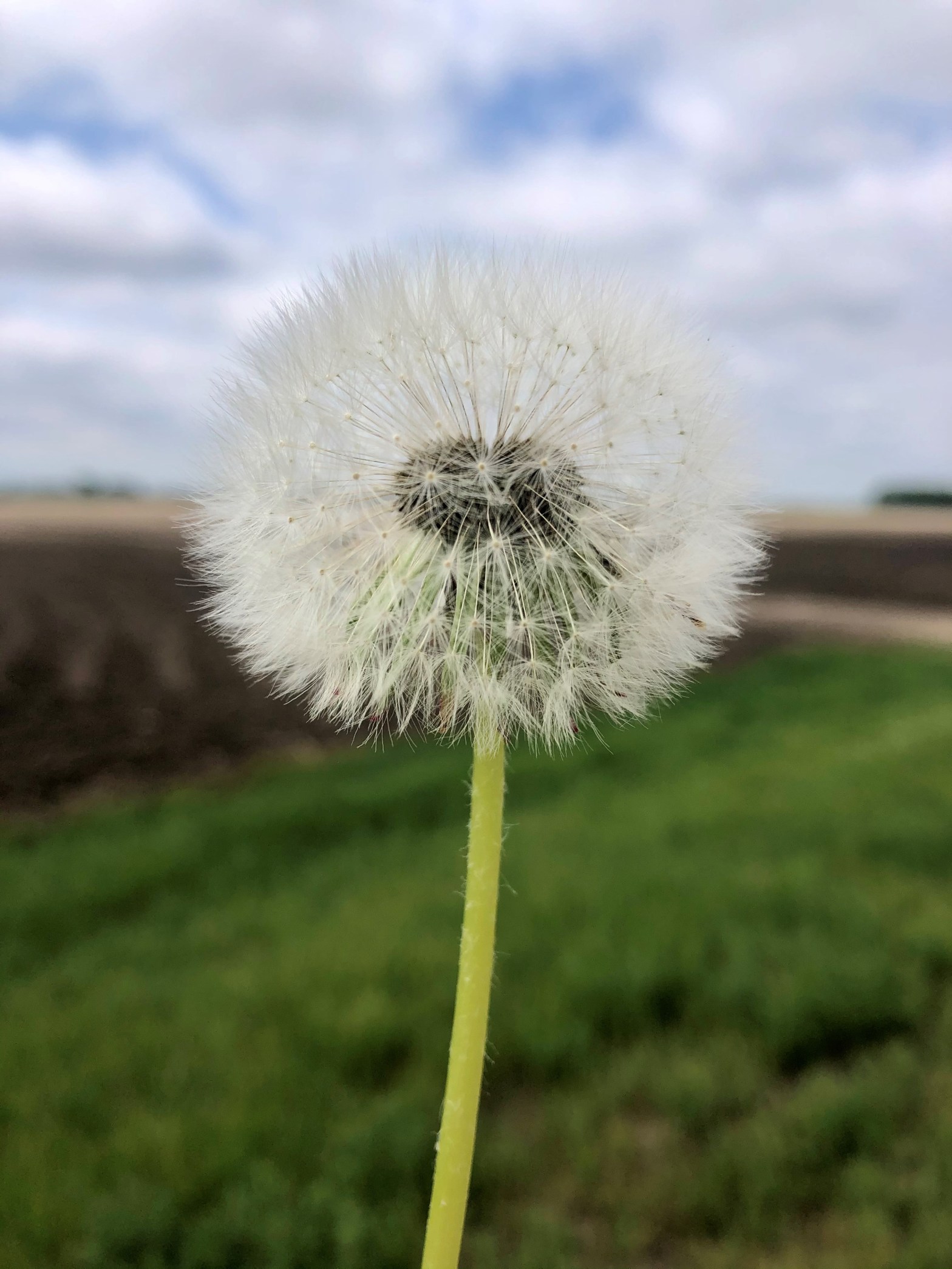
The white one – the perfect puff on a lone, strikingly tall, stem.
And you saw that dandelion and immediately recognized the whimsical, magical, potential encapsulated in this tantalizing thing, the thing you were supposed to leave on the roadside?
What was your your wish?
What did you want more than anything in the entire world, in that single moment?
Flash forward(cue movie scene, catchy song, golden hour countryside).
Do you remember that wish? Probably not. But never mind.
Let me ask a different question:
What do you wish for now?
Maybe you wish to replay the movie of your life thus far because, believe it or not, in this moment, you understand why all that time passes in the span of a song.
Maybe you wish for world peace, understanding, a reliable food supply, an epiphany, an answer to your prayers.
Maybe you’re still whimsical and wish to fall happily and madly in love, to dance through the fields under the shining stars, surrounded by the blinking fireflies (I know I do).
Maybe, just maybe, you’ll wish to be cognizant, appreciative, and utterly in awe of the change you’ll undergo so that the next time you find the perfect dandelion puff, you’ll look back and be amazed at all you’ve overcome.
As you know by now, I started On Happiness for a lot of reasons. But at the end of the day, I think I was trying to save, catalog, and explore a side of myself I didn’t know existed. In doing so, I uncovered so. many. thoughts. I changed my opinion. I struggled a bit. I grew some more.
In the early stages of writing – even though I was so excited to write – I found it to be the hardest thing in the world. I wanted my words to be perfect. But even though I believe there is a perfect word for every scenario, I had to face the alternate realization that the words will never be perfect. Inevitably, I will go back, or someone with a different perspective will read this, and we will both think, “How in the world could I (she) have written this?”
And that’s okay. I will not be the same person when I finish this book. Maybe you won’t either (maybe no one will actually ever read this, who knows). But I think that’s the point: you should always be seeking for the thing, the experience, the meaning, the unknown that helps you continually redefine and better you, no matter who is watching.
So go ahead:
Wake up on the wrong side of the bed.
Test out the day.
Feel those feelings.
Relentlessly chase meaning.
And buckle up, friends. This will be quite journey.
And if you need me in the process, I’ll be right here to listen, I promise.
“Creativity? What’s this girl going on about now?”
Okay, so maybe you aren’t actually saying that. But given that I just mentioned I wanted to write about happiness, talking about creativity may seem a little removed. I would have thought so at first, too, but surprisingly, happiness and creativity are more connected than you might think. I’ll get into that in a second, but first, a list on why creativity is cool/matters:
1. It allows you to recognize there is pure awe to be had about the world – the potential for any and everything is immense.
2. You can do anything, you just have to believe (in yourself).
3. We all have it, we just need to figure out where our interests lie.
4. Through communication and patterns of thought, it distinguishes my idea from someone else’s similar idea.
5. It allows us to believe that when we step out of our comfort zone, everything will be okay.
6. It helps me realize failure is an opportunity for growth and gratitude.
7. “Once you start creating things, you start to realize everything has intention behind it.”1
Be intentional.
8. Don’t laugh, but it makes work fun. There is some, but also little, reason to be bored, annoyed, and disgruntled with menial or less-than ideal tasks, especially if it puts you in a bad mood. Rather, maybe reimagine it into a project you’d rather spend time doing.
(You know those people that say, “C’mon, it’ll be funnn”? Yeah, that’s me. I’d rather try to be annoyed as little as possible each day, so reminding myself I have creative freedom is *ehem* liberating.)
As you potentially have stumbled upon by now, I initially started working on this … book?… for one of my summer classes, which was a course about creativity. During the first half of the course, we discussed different creative theories while the second half focused on bringing out creativity in the classroom. It was actually a course designed for teachers, which hopefully, some day, I will be in some capacity, but I actually took the class pretty selfishly.
I’d been wanting to write on the subject of happiness for some time, but you know, life always seemed to get in the way. Lucky for me, I glanced over the syllabus prior to registration and noticed one of the assignments was to engage in some type of creative activity, something we had never done before. Well, I have done a lot of journaling before, critical reflection of a sort, but I’d been thinking about compiling all my thoughts in a different fashion. But how? The answer: autoethnography.
Early in 2021, I was interviewing to be admitted as a doctoral student at the University of Georgia. I do not fully remember the entirety of this question that one of the panelists asked me, but I must have shared something about this On Happiness idea because she then asked if I had ever heard of what was called an “autoethnography.” I am sure I responded by making some comment about an autobiography. If you thought similarly, not to worry, there is a pretty cool difference, but they are easily mixed up. Autoethnographies, as with autobiographies, are personal accounts, often used in research, to examine how culture and individual life experiences shape the way someone approaches new situations, problems, or differing perspectives. Essentially, autoethnographies are a way to engage in self-reflection to make sense of a problem or recurring theme and enhance a story. Autobiographies, on the other hand, usually involve recounting life events.
Early on in my creativity course, we learned about the number of ways creativity, as well as creative people, are defined and described. At first, I was blown away – I had revelation after revelation and frequently paced up and down my tiny apartment so I could sort out my hundreds of thoughts.
If you are like me, you may have grown up thinking creativity was merely anything having to do something with art, anything associated with wild, unique, and collaborative colors and patterns. And people who were creative were the ones who were in theater, the ones who got As in art class, the ones who were elected to the student council because of their beautiful posters, the ones who wore funky fashions, the ones who were always doodling in the margins of their notebooks. They were unique, bold, and authentic personalities. But the more I learned in this class, and the more I thought about it, the more I realized creativity is not anything exclusively or directly associated with art and patterns and colors, nor is it limited to only one type of person.
To a degree, I wonder if a more accurate assessment of my past conception of creativity was that I found it to be a rarity – something only certain people could market of themselves. I don’t know about you, but my thought was whoever could take their color-coded history map and make it something different than the rest of us, well, then, they were obviously a creative genius. (Don’t get me wrong, I love color-coding, but I suppose it’s rather hard to believe in the ubiquity of creativity when schools and kids from growing up, society, social media, etc. etc. preach conformity and tell us about the latest trends and give messages about “well so and so said this so obviously this is the proper reaction.”)
So you could say I thought creativity was limited, like it was something you had to discover. But it’s not. Creativity – possibility, wonder – exists in droves around us I just think many are unwilling to grab ahold.
Again, the more I thought about it, the more I realized creativity is indeed limited, but I say that because I believe it is limited to those willing to be a lone personality, the ones looking to be the utterly true version of themselves, no matter their profession or interests. The ones who take their daily list of tasks and simply exude the mantra, “you’ll never work a day in your life if you love your job.” Creativity allows us to go after meaning, passion, and purpose without fear of failure.
One of the best definitions I have read about creativity, specifically as it relates to creative people, was by Donald MacKinnon, a professor and psychologist at the University of California, Berkeley who led research on characteristics of creative people. He found that, in a way, many creative people also often believe things simply will work out because they have
the courage to question what is generally accepted;
the courageto be destructive in order that something better can be constructed;
the courageto think thoughts unlike anyone else’s;
the courageto be open to experience both from within and from without;
the courage to follow one’s intuition rather than logic;
the courageto imagine the impossible and try to achieve it;
the courageto stand aside from collectivity and in conflict with it if necessary;
the courageto become and to be oneself.2
I certainly am in no way advocating you take down an entire governmental system or ignore your teachers or disrespect your bosses. Rather, I am suggesting you imagine what would happen if instead of robotically going through the week – and getting to Friday and realizing you have no recollection of actual thought – you actually saw the day. Synthesized the day. Cataloged the day. And recognized the day – each day – as the unique gift it is.
To be creative is to have the courage to become and to be oneself.
Donald Mackinnon
Creativity is not so much artistic tendencies and colorful life habits as it is the way in which you find meaning and confidence in your own abilities to succeed and push beyond where most people would stop. Creativity is the way you approach problems – the way in which you reframe a problem into an opportunity. Creativity is the way you communicate your thoughts to unlock and inspire ideas in others. Creativity is the way in which you do not take no for answer and leave no regrets behind.
We all are, and can be, creative.
At first glance, I still have troubles connecting what I learned in my creativity course to this autoethnographic work. After all, discussing happiness, or the pursuit thereof, is not a wildly creative, innovative, ingenious, or novel idea. It may be a marketable idea, but it is not a novel one.
So why bother? Why throw my thoughts in the mix when so many others have already written about this apparently elusive concept?
Well, I think that is my answer to my takeaway from my professor’s question: I want to help people precisely because I want to add one more voice to the mix. In doing so, I will communicate my thoughts, ideas, experiences, and connections in a new way, maybe in a way someone will have never heard. And maybe, just maybe, something will strike a chord with someone. Maybe that someone is you, maybe it’s not.
Bottom line: if I can help just one person believe in the infinite uniqueness, infinite creativity, of themselves – and remind them they are loved, they have purpose, they can be happy, they have a voice to share – well, then I think I’ll have succeeded. And that’s a powerful thought -a naïve thought – but hey, a thought I’d like to try anyway. Because at the end of the day,
everyone deserves to know they have someone who believes in them.
Notes:
For more, check out the novel Creative Confidence: Unleashing the Creative Potential Within Us All by Tom Kelley and David Kelley.
From In Search of Human Effectiveness by Donald MacKinnon (1978).
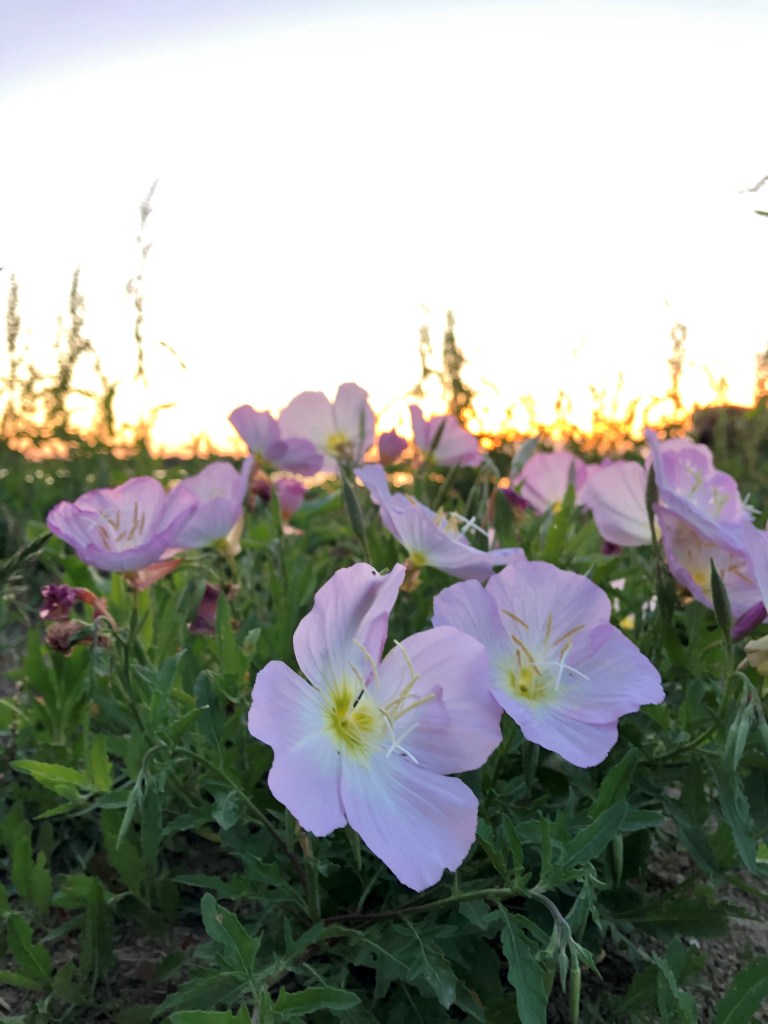
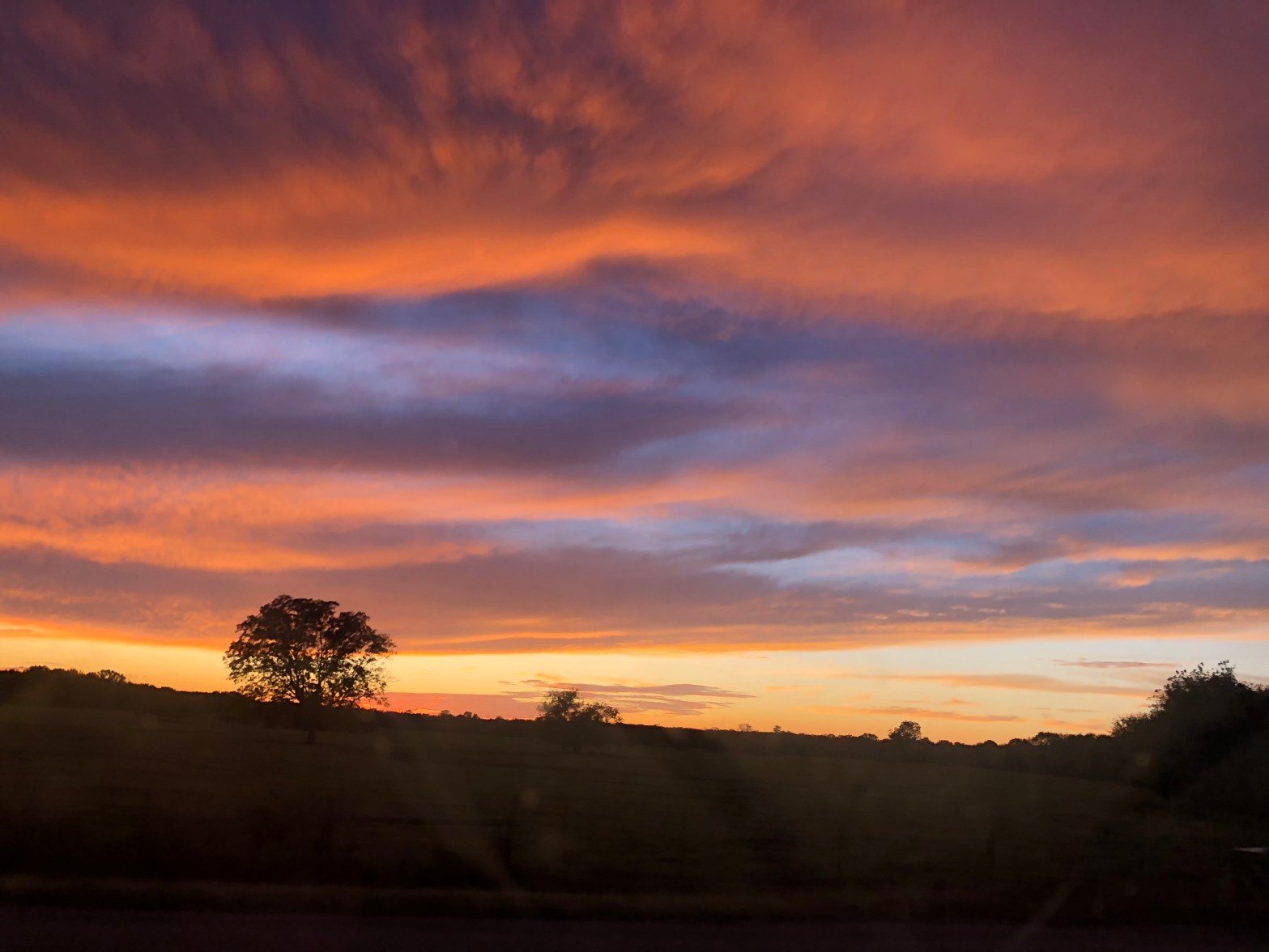
A car effortlessly flies down the road, crests one hill then another, no others in sight. The windows are rolled down, outside noise bombarding in as the wind and world collectively rush by. Meanwhile, the sun sinks in the sky, washing everything in a wonderous, blazing light. Maybe music is coming from the stereo – you know the song – probably some crooning country one that perfectly matches and pulses with the golden-hour countryside yet somehow doesn’t disrupt the peace offered by the beauty.
Who is the driver? Is it the heartbroken rom-com character, trekking across the country to get the love of their life back? The sultry but unwilling to admit it prodigal son? The best friend, the one who effortlessly throws a smile over their shoulder to the passenger? Is it you, seamlessly moving at the speed of the song, of life, toward what’s next?
Or, is it life itself?
As of late, I have become a big movie-watcher. Usually, I turn on a rom-com, but honestly, give me a good story – some laughs, maybe a few tears, an inspirational quote or two, and a good glass of red wine – and I’ll sit pretty content. The thing about most movies is they have exactly that scene, the memorable climax where emotions seemingly pour from the television screen – can you picture it, feel it? Does one come to mind?
Time at this point in the movie moves at an incredible pace, the speed of a song, really, and by the end of that song, the character arrives at their destination. Well, I am almost always listening to music – and driving – and I can assure you, this phenomenon has never happened to me. What is it with movies, or maybe even the 300-some odd pages of that young adult novel you’ve recently been absorbed in, depicting an unfathomable, yet desirable, turning of time? Perhaps these media aim to subtly remind us
with time, everything will work out,
whatever it is, this too shall pass,
and even – “this is your moment, live now.”
I get caught up thinking about “movie time.” Sometimes I have a moment, one where I’ve looked up – and stopped – and fleetingly recognized I’ve let time do too good a job of passing time. And I wonder.
“Is this my movie moment? Is this that golden-hour, windows rolled down, hair blowing in the wind, time-racing-at-the-speed-of-the-song scene I have always longed for?”
Only to realize seconds later, it is, in fact, not.
The actuality of these moments is that I realize life – mine, yours, everyone’s – is merely a series of memories, exclamations, and epiphanies, all connected by the stresses, joys, frustrations, annoyances, jubilations, and realizations experienced as a result of merely “having a day.” And we get a new chance each day to find our movie climax, even if it is the smallest moment – good or bad – to remind us each day is distinguishable from the next. Because when I, you – we – look back the next day, week, year, decade….we will all find and relive the movie scene memories of our lives.
I suppose by now I have you highly confused, what with movie scenes and time and rolling country sides at golden hour…I have a point, I promise.
Is this that golden-hour, windows rolled down, hair blowing in the wind, time-racing-at-the-speed-of-the-song scene I have always longed for?
At the core, I truly aim for this work to be an exploration of happiness; selfishly, I suppose, mainly mine. For months, I have been thinking about the idea of a theory of everything, except on happiness (duh). My brother, an incredibly logical person (read: 🙄), aptly described my idea back to me by saying, “So basically, you’re gonna look at all things that matter to people but also don’t really matter at all? Well, I guess that’s cool, but I think philosophy is kind of dumb.”
Gee, tell me how you really feel, Trevor. I guess that’s why opinions are personal – everyone has one, and you can choose to listen, or not, or store it away as a reminder that not everything is everyone’s thing.
But back to my happiness monologue. I have two main points, but they are so intertwined, the start of one and the end of the other get lost in the mix.
1 All my life I have been a fairly reliable happy-go-lucky person. Once, my friends even awarded me the title “Biggest Ray of Sunshine.” Likely in part because a lot of the time I find it hard not to smile in delight when all I’ve done is merely walked outside to be greeted by the beaming sun and beautiful day. Often, others around me seem to rely on this steady stream of upbeat energy.
But, hey, friends, listen. Life can be pretty hard, and I know it is impossible to be happy at absolutely all times. We have hardships. Maybe they are emotional hardships with friends, family, or significant others. Maybe we all survive a pandemic. Maybe there was a natural disaster. Or maybe, you’ve just woken up on the wrong side of the bed and you need a simple reminder that today is going to work out and good things still exist.
Happiness is not simply some end state of being. It. Is. Fickle. Yet, it is also
Uplifting.
Overwhelming.
Fluctuating.
Liberating.
Nostalgic.
Bittersweet.
Whimsical.
Emotional.
Sad.
Rewarding.
It is so many things, and if someone – like myself, perhaps – who is often known to be happy, needs to hear it is a journey, and it is okay to not always be happy, then I am here to tell me – and you – that.
I’ve previously heard happiness described as the joy experienced as a result of working diligently toward something you love.1 I’d like to take it a step forward, or maybe, a step in another direction:
Happiness is a by-product of a value-driven life, and it is these values that guide the thoughts, choices, and actions of our everyday lives.
Added together, these moments build and build and build, until suddenly you look back and see the good work, see the movie of your life, spread before you on the sunset-spotlighted highway.
So that’s point one – happiness is what you find when you choose to live by your values, intangible yet powerful conceptions that will push, guide, and remind you it’s all going to be alright.
Maybe you read that last line and you thought, “YES.” But maybe you’re a skeptic.
“How in the world is this girl going to sit here and tell me it’s going to be alright? She doesn’t even know me.”
You’re right, I don’t know you. But I do fully ascribe to the ideal that with a little bit – or a lot – of hard work, things will work out, and here’s why:
2 For a lot of my life, I have heard people say – in response to my unfailingly idealistic, “It’ll work out!” – “well yeah, it would work out for you, you’re Jade.”
I would not say this statement makes me angry or confused, but perhaps a little sad. I believe in myself, my abilities, my values, if you will, and my voice to get me to where I need to be. Sure, I have spirituality and religion and just a whole lot of faith in the inherent goodness of the world on my side. But at the end of the day, I am successful because I believe in myself and I believe in good things. And you need to as well.
You are a person who will make a difference in your own and others’ lives, but you absolutely musthave faith in yourself, your values, and your ability to be a unique and authentic person with a distinguishable voice.
I once took a grant-proposal writing course, and I am not exaggerating when I say this professor changed my life, or at least, reframed my outlook on life. All semester long we discussed the art of writing a grant proposal. Early on, she discussed the importance of funding, as in, identifying a problem unique enough to be worthy of funding.
She would say, “When asking for funding, be mindful that every person applying for the grant also needs money – why is your need greater? Show me, tell me.”
(Sorry, please enlighten me, what does writing a grant proposal have to do with values and happiness and inner voice? I’ll get there, don’t you worry.)
I am not certain my professor will ever truly know how meaningful I found this statement to be, but I am reminded of its importance almost daily. Time and time again, I have said – and have heard others say – “well, I just want to help people.” But what does that mean? What does that look like? I don’t want you to come up with some earth-shattering purpose statement right now, but I do strongly believe when you fully show someone exactly why it is you do what you do, when you have words to describe your desires, you can manifest your values and inner voice. And at the end, you may find a small bit of happiness to add to the movie reel of your life.
So, point two: you must remind yourself of the reason you need [funding], the reason you show up day after day, so that you, too, are the person “things just work out for.”
There’s a quote I set as one of my resolutions for 2021. Maybe you’ve heard of it-
“Never, never, never give up,” Winston Churchill.
Apparently, over time, the full meaning of this quote has been a little lost, a little skewed. If you are one of the people who does know this fact, or does know the context of the surrounding speech, I will apologize and then immediately retract my apology. I do think we should never, never, never give up. I’ll say it again: life can be pretty hard. But if you tell yourself something exists on the other side of whatever it is you are struggling with, you will come out on top. But you must believe that.
Work hard for, cry over, and delight in the things you value to feel accomplished, joyous, and happy, all so that you can share with others the products, hardships, lessons, and voice you’ve found and refined along the way.
Never, never, never give up.
Winston churchill
Notes:
1 For more, check out the podcast episode* “Awesomeology (Gratitude) with Neil Pasricha” from the podcast series Ologies with Ali Ward.










 ON HAPPINESS